
Home Care for Someone With Cancer: Practical Support During Treatment and Recovery
Cancer can reorganize an entire household around appointments, fatigue, changing routines, and the work of getting through an ordinary day. Home care can take on practical responsibilities so the person and family have more energy for treatment, recovery, and time together.
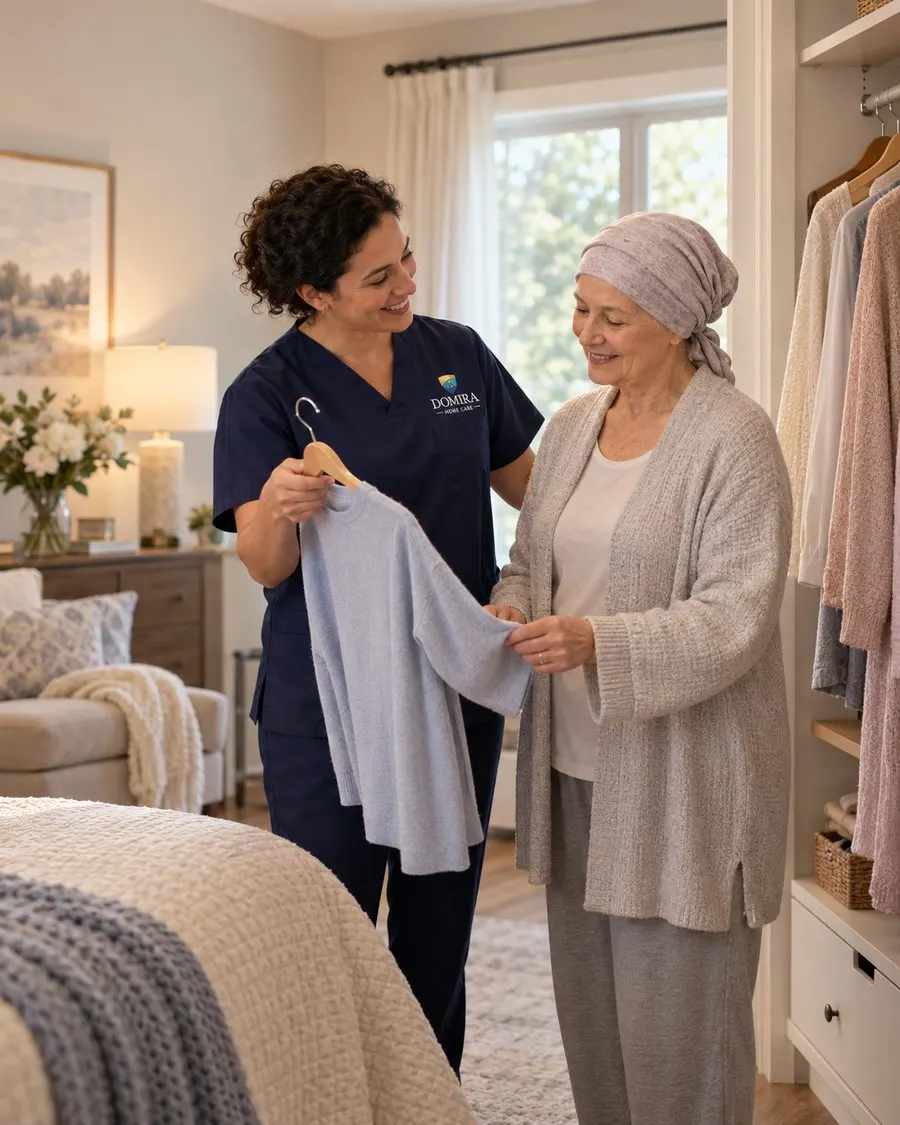
Build the plan around what is changing in everyday life.
The most useful support plan starts with the routines that are becoming harder, not with a generic service package.
Look at bathing, dressing, toileting, mobility, meals, transportation, medication reminders, household tasks, time alone, nighttime needs, and the amount of responsibility the family is carrying. Those details tell you what kind of home support would actually make the day easier.
Home care can carry the ordinary work that treatment makes harder.
Meals and household routines
Meal preparation, groceries, laundry, and light housekeeping can help the household keep moving when treatment disrupts energy and time.
Personal care
Bathing, dressing, grooming, toileting, and mobility assistance can be added when the person needs more help getting through the day.
Transportation and appointments
Care can include transportation or accompaniment for treatment, follow-up appointments, errands, and other scheduled needs.
Companionship
Treatment can be isolating. A caregiver can provide conversation, company, shared routines, and a familiar presence at home.
Medication reminders
Caregivers can provide reminders after the medication plan has been established and organized by the person, family, pharmacy, or clinical team.
Family respite
Professional support can give family members time to work, rest, care for children, attend their own appointments, or simply be family for a while.
Treatment can make ordinary household routines harder even when skilled nursing is not needed.
Fatigue, frequent appointments, changes in appetite, pain, weakness, or simply the cumulative workload of treatment can make daily life difficult for the person and family.
Home care for cancer patients focuses on the non-medical work around treatment: meals, personal care, transportation, errands, laundry, light housekeeping, companionship, and respite. Those needs may be temporary during an intensive treatment period, recur in cycles, or continue longer during recovery.
The right schedule often depends on treatment timing. Some people need help primarily on appointment or infusion days. Others need more support for several days afterward when energy is lower. A caregiver can adapt the daily routine around those known patterns without interpreting symptoms or making treatment decisions.
Families should be clear about the boundary between home care and clinical cancer care. Oncology teams, home health, hospice, or other licensed providers handle treatment, skilled nursing, symptom management, and clinical decisions. Non-medical caregivers help the person live through the hours between those clinical contacts.
Use caregiver hours where treatment creates the most disruption.
Treatment-day transportation
A caregiver can drive, accompany the person when appropriate, help with getting ready, and handle errands around appointments when the family cannot cover every visit.
Meals when energy is low
Shopping, meal preparation, hydration setup, dishes, and kitchen cleanup can be handled according to the person's preferences and any instructions provided by the healthcare team.
Personal care during harder days
Bathing, dressing, grooming, toileting, and mobility assistance may become more useful on days when treatment or recovery leaves the person weak or fatigued.
Household continuity
Laundry, linens, light housekeeping, trash, groceries, and basic household routines can continue without depending entirely on the person receiving treatment or one family caregiver.
Companionship and observation
A familiar caregiver can provide company and notice meaningful changes in the person's usual routine. New or worsening symptoms should be reported to the family and appropriate clinical team rather than interpreted by the caregiver.
Respite for family
Family members often juggle appointments, work, children, household responsibilities, and emotional support. Recurring respite support can create predictable time away without leaving the person unsupported.
Cancer home care can be concentrated around the days when support is actually needed.
Some families need transportation and several hours of help only on treatment days. Others find that the day after treatment is harder, or that fatigue builds over several days. The right schedule should reflect that pattern rather than assuming every day will look the same.
It can help to map the week: treatment appointments, expected lower-energy periods, grocery needs, laundry, personal care, family work schedules, and the times when the person is usually alone. That makes it easier to decide where caregiver hours will have the greatest practical value.
As treatment changes, the home-care plan can change too. More support may be appropriate during an intensive phase, followed by fewer hours during recovery. If symptoms or function change unexpectedly, the family should contact the oncology or clinical team and then update the non-medical care plan around the new recommendations.
Questions families often ask
What can a home caregiver do for someone with cancer?
Depending on the plan, a caregiver may help with meals, bathing, dressing, mobility, transportation, errands, housekeeping, laundry, medication reminders, companionship, and respite for family.
Can a caregiver drive someone to cancer treatment?
Transportation or accompaniment can be included when it fits the care plan and scheduling arrangement.
Can home care help when cancer treatment causes fatigue?
A caregiver can take on meals, household tasks, errands, personal care, and other daily responsibilities that may be harder when energy is limited.
Does home care replace oncology nursing or home health?
No. The cancer care team, home health, hospice, or other licensed providers remain responsible for clinical treatment and skilled care.
Can care be temporary during treatment or recovery?
Yes. Home care can be arranged around a period of treatment, surgery, or recovery and adjusted as the person's routine and level of independence change. See Post-Surgery Home Care.
Sources and scope
National Cancer Institute: Support for Caregivers of Cancer Patients
National Cancer Institute: When Someone You Love Is Being Treated for Cancer
This guide focuses on practical help at home. Cancer treatment, symptom management, skilled nursing, medication administration, and other clinical care remain with the oncology and licensed care teams.
Continue the planning conversation
When the day is getting harder to carry, the care plan can change.
Tell us what is happening at home. Domira can help you think through the hours, routines, caregiver fit, and level of support that would make daily life more manageable.